
Content Marketing ROI: What Smart Business Owners Need to Know in 2026
You’re creating content, you’re being consistent, you’re checking the boxes, but you’re still left wondering why all the time and effort you’re putting in isn’t showing up as leads, clients, or revenue.
Except, what most business owners don’t think about — and most coaches don’t talk about — is the platform you’re creating for is just as important as the content you’re creating. And where you post can determine just how much visibility and awareness your content can bring you.
Content marketing, on paper, has a strong return. On average, it generates around $3 for every dollar invested, compared to $1.80 for paid advertising — and it costs 62% less than traditional marketing while generating three times more leads.
But the average content marketing ROI also depends on the platform, with some (like YouTube and SEO) bringing higher-than-average ROIs. If you’re debating on which platform to use to publish your content, here is what you need to know:
What is “Content Marketing ROI” (and How to Calculate it)
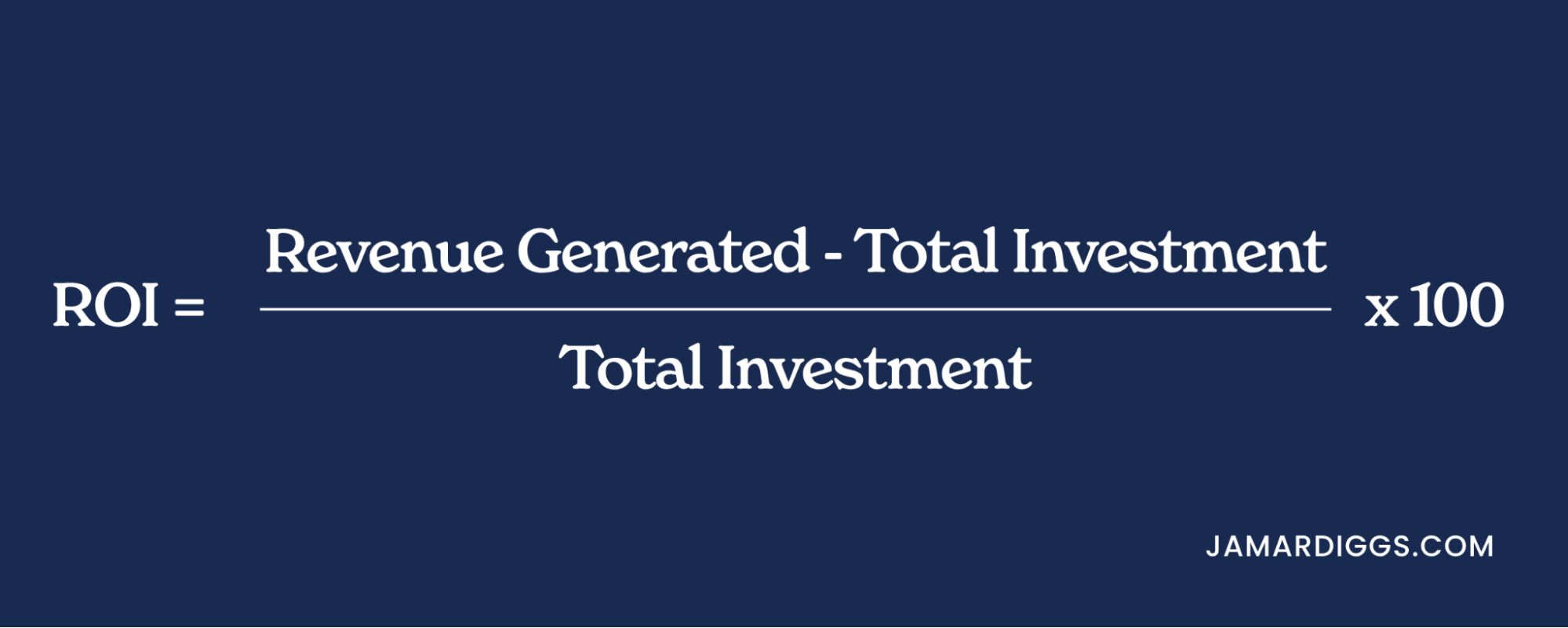
Your content marketing ROI (return on investment) is the measurement of your profitability on content programs against the production and distribution costs. Essentially, it’s telling you if a platform you’re marketing on is profitable — and worth spending more time and money on — or if the cost of marketing on said platform is more than what you’re earning from it.
ROI works on a formula:
While we talk about a platform’s ROI like it’s an individual, the reality is that most content marketing ROIs are multi-touch. Your buyers rarely convert on the first interaction with you, and a multi-touch model recognizes the top-of-funnel content (and platforms) to ensure they get credit for the sale, too.
For example, someone might discover you on YouTube, sign up for your free resource, read your newsletter for the next three months, then click the link and convert to a client.
Technically the lead originated from your YouTube content, but your email content marketing also contributed to the sale, impacting both your ROI for email and ROI for YouTube.
Also note that the sale wouldn’t have happened without the email marketing — but the email subscriber wouldn’t exist without YouTube.
Regular (Simple) ROI vs. Compounding Content Marketing ROI
Regular (simple) ROI is the same ROI discussed above — for most platforms, you experience simple ROI. You have an investment for a piece of content that you post, it performs, and then it’s done and you’re onto creating the next piece of content for that platform — and repeat.
Compounding ROI looks similar in the beginning (or over short periods of time), but outperforms regular ROI over time. It’s used for content marketing platforms where the content continues to perform weeks, months, and even years after the original piece of content is published.
For example, Instagram would use regular, simple ROI. If you create a campaign for stories (or even your feed), it’s useful during the launch — but stops converting after a short period of time, often hours, days, and occasionally, weeks.
YouTube would use compounding ROI. Your video can continue to perform for years and show up in search results. For example, a YouTube video could attract 15 new email subscribers the first month it’s published. But rather than disappearing into the feed, the same video can continue to generate new email subscribers month over month — drastically increasing the ROI of your video.
How Your Content Marketing Platforms Work Together
The short version: what to expect for your content marketing’s ROI depends on your marketing funnel and the job each platform has in your business.
Content marketing is not an either/or. The smartest move for most business owners is finding platforms to:
Build brand awareness (like short-form social platforms, like Instagram)
Nurture their audience (like a podcast)
Finding new audiences (like YouTube or blogging)
As a YouTube strategist, the biggest mistake I see business owners make when starting with YouTube is ghosting their social media — and other platforms — before their videos even go live. But a good, effective content marketing strategy would use YouTube and their social media to generate leads, visibility, and convert to sales.
In fact, YouTube videos perform better, faster when you share the link across multiple platforms and generate referral traffic and initial video views.
How to Choose the Right Platform for Your Content
Before you plan your next video, post, or episode, ask yourself: what do you actually want or need your content to do for your business?
Are you trying to get in front of people who don’t know you yet? Are you trying to stay top of mind with people who already do? Does your audience know what you do — or do they know there’s a solution to their problem at all?
If you want to get a good ROI on your content, no matter the platform or type of content created, your answer shapes it all. While every platform has content, each platform also has a job. But when you’re using a nurture tool to do discovery work — or a discovery platform to do relationship building — you end up burned out, overwhelmed, and confused about why it’s not working.
For example, YouTube is a search engine first. It’s built for discovery, for people actively searching for answers to problems they have right now. A podcast is almost the opposite, it’s a middle-to-bottom-of-funnel format: fantastic for people who already know who you are, but a tough place to build new awareness from scratch.
Your content on YouTube is ideal for attracting new people to your audience, to get email subscribers and free resource downloads. Your podcast is ideal for nurturing leads and building trust.
A podcast has an average ROI of 4.9x, where YouTube averages 3-5x within the first 12 months. The difference? YouTube compounds over time, with the ROI frequently passing 10x after 18-24 months.
And for a podcast? You only get the ROI if you have an audience to listen to it.
It’s not just podcasting or YouTube, though, it’s Pinterest, blogging, short-form video and social media — they each have their own purpose in your marketing funnel that influences the ROI of your content marketing and which is best for you.
How to Know Which Content is Actually Driving Revenue
Track your content, your conversions, and your links. It’s the only way to know where your leads are coming from and which content or platform is contributing to your sales and bringing new leads into your funnel.
Set up your Google Analytics, utilize UTMs, and track the attribution in a database if possible. UTMs, or UTM parameters, are short tags you can add to the links in your video descriptions, your social media bios, in your email newsletters — basically anywhere you send people.
When someone clicks on the link with your UTM parameters, it’s attributed in your analytics, allowing you to see exactly where the user/lead comes from and even the piece of content they clicked through.
You can use this data to track how many subscribers are coming from your YouTube videos vs. clicking the link in your stories. Or how many booked calls you get from users who downloaded your lead magnet. You’re able to directly determine if a platform is working or if it’s not.
Your Next Step to Better Content Marketing ROI
It sounds like a lot — picking the right platform, understanding what ROI is, mapping your funnel, tracking what’s working — and it can be. But, in practice, it starts with one thing: knowing where (and what) your audience is searching for and showing up there with content that has a job to-do.
If you’re ready to figure out what that looks like for your business and start building on a platform that creates more visibility for your business, start with the Low-Lift Starter Kit, a YouTube Course to create and optimize your business channel.
